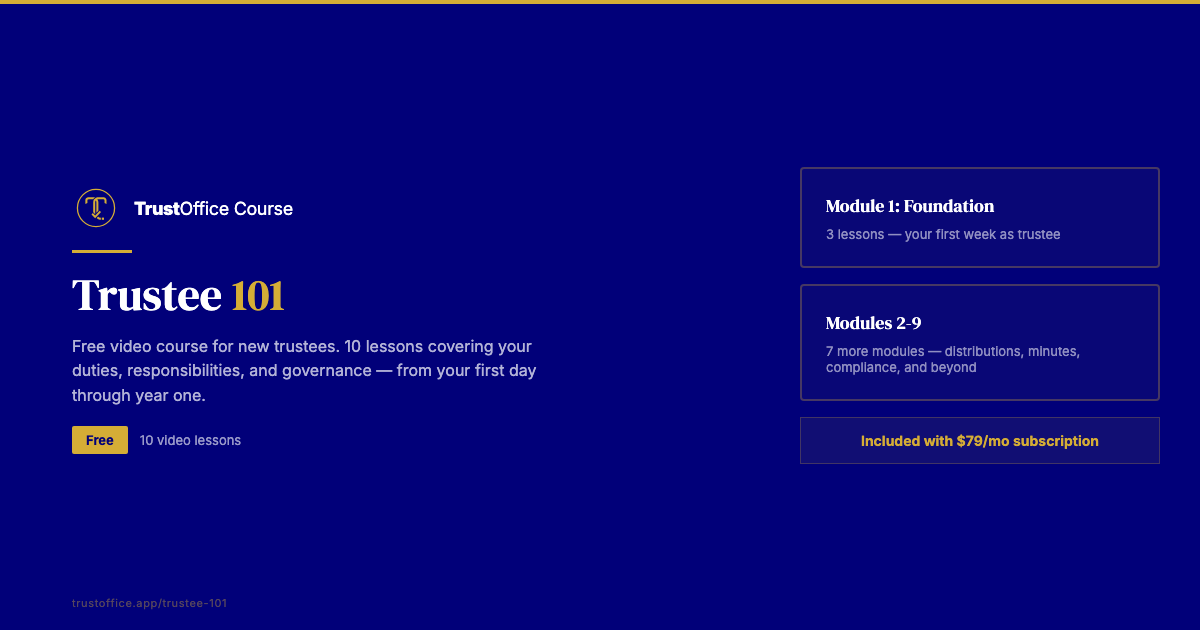
Participate in a Gratis Trustee Class to Advance Your Expertise This Day
Taking a no-cost trustee training can significantly boost one's professional abilities. It offers vital information regarding trustee duties and wealth management. Trainees can progress at their own rhythm while engaging with field professionals. This prospect not only deepens comprehension but also unlocks opportunities for professional development. However, many may consider what tangible abilities they can anticipate gaining and how these can be implemented in practical contexts.

Core Strengths You'll Build From a Free Trustee Course
A free trustee program provides participants with essential skills crucial for sound management and oversight. The curriculum covers key areas such as financial education, enabling trustees to comprehend budgets, financial statements, and investment approaches. Participants also develop expertise into legal responsibilities, guaranteeing compliance with laws and moral principles.
Furthermore, the program enhances strategic planning capabilities, preparing people to add to extended company objectives. Effective communication abilities are another important aspect, allowing board members to express concepts distinctly and engage stakeholders successfully.
Furthermore, teamwork and leadership skills are stressed, fostering collaboration among board members and advancing a constructive decision-making process. Dispute management techniques are also instructed, preparing participants to handle disagreements professionally.
In the end, these skills not only prepare individuals for their positions as trustees but also strengthen their overall management abilities, making them valuable assets to any organization.
Top Advantages to Enroll in a Free Trustee Program for Career Advancement
While numerous experts seek ways to enhance their careers, taking a complimentary trustee course offers distinctive benefits that can greatly boost one's trajectory. Initially, these courses deliver essential knowledge about trustee obligations, enhancing a professional's credibility in their field. Comprehending the ethical and legal duties of a trustee can create new career opportunities and roles.
Moreover, connecting with industry professionals and colleagues during these programs can result in beneficial relationships that may facilitate career progression. Participants also acquire hands-on expertise in accounting and oversight, which are increasingly sought after in various industries. Finally, the flexibility of digital learning allows individuals to study at their own speed, making it easier to balance education with current work responsibilities. Overall, signing up for a free trustee course not only enriches knowledge but can also considerably enhance professional opportunities and career development.
Finding the Top Free Trustee Course for You
How can one recognize the most fitting free trustee course among the abundance of alternatives offered? First, learners need to copyrightine their exact necessities and professional aspirations, figuring out what expertise or understanding needs they intend to cover. Next, copyrightining course materials and organization is vital; a detailed curriculum plan can suggest whether the course will satisfy individual requirements.
Moreover, reviewing the credentials of the teaching staff can supply insight into the excellence of relevant resource education delivered. Feedback from past participants past attendees are essential, as they reflect real experiences and results.
Finally, evaluating the flexibility of the course presentation—whether it is independent-paced or predetermined—can support in choosing a course that fits one's lifestyle. By taking into account these factors, individuals can make a more well-reasoned choice, ensuring the selected program aligns with their career goals and learning preferences.
Effective Strategies for Getting the Most Out of Your Trustee Course
To maximize the benefits of a trustee course, a strategic approach is needed. Participants must start by defining clear goals and identifying the particular skills or knowledge they want to gain. Active engagement in the learning process is essential; this involves joining discussions, asking questions, and working together with peers. Consistently reviewing course content supports better understanding and retention of key concepts.
Moreover, it is beneficial to take notes and create summaries of key subjects, facilitating easier review later. Networking with fellow participants can offer useful perspectives and assistance, fostering a sense of community. Utilizing supplementary resources, such as suggested texts or web-based discussions, can improve understanding and implementation of acquired knowledge.
In conclusion, applying the knowledge in practical scenarios, whether through simulations or real-life situations, reinforces understanding and increases confidence in trustee obligations. By implementing these strategies, individuals can fully take advantage of their trustee course instruction for career and personal advancement.
Everyday Applications of Fiduciary Proficiencies in Governance
Trustee skills play a crucial role in effective governance, allowing individuals to navigate intricate institutional environments. These skills are critical for fostering openness, responsibility, and principled choices within different organizations, including nonprofits, educational institutions, and corporate boards. Trustees outfitted with robust analytical capabilities can assess organizational performance, financial health, and adherence to regulatory standards, thus improving overall governance.
Moreover, effective communication abilities allow trustees to work with stakeholders, ensuring that multiple viewpoints are taken into account in decision-making processes. Dispute management skills are just as vital, since they help copyright harmony and collaboration among board members and other stakeholders. Additionally, strategic planning abilities allow trustees to coordinate organizational goals with broader missions, guaranteeing sustainability and growth. In this way, the application of trustee skills in governance reinforces institutional frameworks but also cultivates trust and integrity within communities and organizations.
Popular Inquiries That Are Posed Often
Do Complimentary Trustee Programs Gain Recognition from Industry Associations?
Free trustee courses may not always be acknowledged by professional organizations. Recognition generally relies on the course provider and the designated accrediting entity, so candidates should validate credentials before signing up for any program.
How Much Time Will a Typical Free Trustee Course Require to Complete?
A standard free trustee program typically takes between four to eight weeks to complete. Course duration may vary depending on the supplier, content depth, and participant commitment, permitting for flexibility in learning schedules.
Will I Receive a Certification After Completing a Free Trustee Course?
Yes, individuals can typically get a diploma after finishing a free fiduciary program. However, certification availability may vary by organization, so participants should confirm the particular requirements with the course organization before enrolling.
What Restrictions Exist on the Number of Fiduciary Courses I Can Register For?
Typically, there is no restriction to how many trustee courses someone can participate in. People are recommended to take multiple courses for enhancing their knowledge and skills in trustee roles and oversight.
What Conditions Must Be Fulfilled to copyright in a Free Trustee Course?
To join a gratis trustee course, participants typically need a introductory familiarity of financial concepts, commitment to the time commitment, and sometimes former experience in fiduciary positions. Detailed prerequisites may differ by institution.